
How to Successfully Navigate Tariffs and Lumber Price Volatility

The Tariff Landscape and Why It Matters
In 2025, the U.S. government expanded Section 232 tariffs to include lumber, timber, and derivative wood products. Originally aimed at protecting industries tied to national security, these tariffs now affect softwood lumber, plywood, and certain finished wood products.
These duties are layered on top of long-standing anti-dumping and countervailing duties—particularly on Canadian softwood lumber. The combined impact has significantly increased landed costs for importers.
Why this matters:
- Advance RFQs
- Strategic volume buys
- Better alignment between project timelines and material delivery
When import costs rise, domestic mills cannot always scale fast enough to offset the supply gap—leading to tighter inventories and price spikes.
Market Impact: Price Swings and Cost Compression
Tariff announcements often trigger immediate reactions in futures markets. Buyers frequently accelerate purchasing ahead of implementation dates, temporarily pushing prices higher. Once tariffs take effect, supply recalibrates—and volatility continues.
Key impacts include:
- Short-term price spikes before tariff deadlines
- Margin compression for distributors unable to pass through costs
- Higher construction budgets, sometimes adding thousands to new home costs
- Uncertainty in bidding, especially for multi-month or multi-phase projects
Digital Sales Platforms: Improving Transparency in Volatile Markets
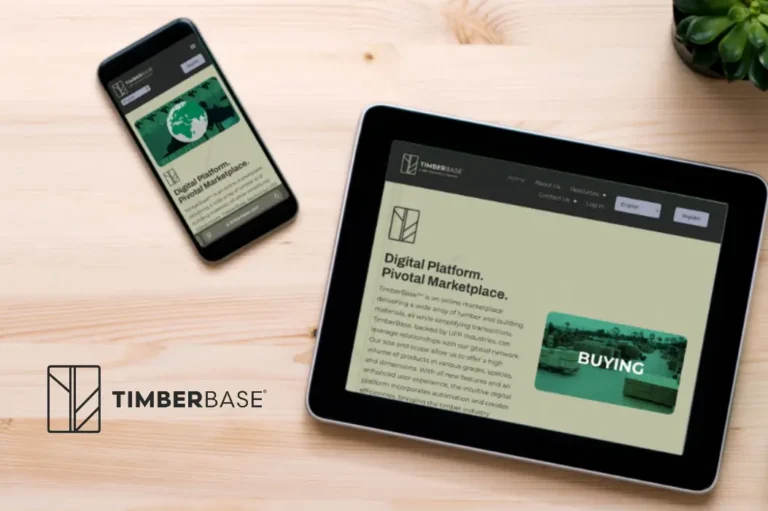
One of the biggest shifts in lumber procurement has been the rise of digital sourcing platforms like TimberBase®.
TimberBase is an online platform connecting lumber buyers and sellers across global markets. Rather than relying solely on fragmented networks, phone calls, and email quotes, buyers can:
- Compare multiple offers
- Easily review current and historical orders
- Track orders in a centralized dashboard
- Improve pricing transparency
In a tariff-driven market, this matters. When duties fluctuate, buyers need visibility into alternative supply options quickly. Digital platforms expand access beyond traditional supplier relationships, enabling procurement teams to pivot efficiently.
Transparency is particularly valuable when calculating total landed cost—including base price, freight, duties, and currency exposure.
Strategies for Managing Tariff-Driven Lumber Volatility
Stay ahead of tariff implementation timelines. When new duties are announced months in advance, strategic forward purchasing may reduce exposure. Monitoring futures markets also provides directional insight.
Overreliance on any single country or region magnifies tariff risk. Expanding supplier networks—domestically and internationally—spreads exposure and increases flexibility.
Digital sourcing tools make diversification far easier than in traditional procurement models.
Where feasible, negotiate longer-term pricing or supply commitments with trusted mills or distributors. While not always possible, structured agreements can reduce short-term volatility exposure.
Carrying modest buffer inventory during relatively stable pricing periods can help cushion sudden spikes. However, balance is critical—over-inventorying creates carrying costs and cash-flow strain.
Builders bidding multi-month projects should incorporate escalation clauses or cost-plus structures to protect margins. Transparent communication with clients about tariff impacts builds trust and avoids unexpected losses.
When feasible, engineered wood products or alternative species may provide cost advantages if they fall outside specific tariff classifications. Early coordination with architects and engineers enables flexibility before specifications are locked.

Turning Volatility into a Competitive Advantage
Tariffs have added complexity to lumber procurement—but they have also rewarded disciplined operators.
Companies that:
- Monitor policy developments
- Diversify supply chains
- Leverage digital transparency
- Build strategic supplier partnerships
are far better positioned to navigate price swings without sacrificing margins.
In many cases, volatility creates opportunity. Suppliers able to secure alternative sources quickly can gain market share when competitors struggle with constrained supply.
The Bottom Line
Lumber price volatility driven by tariffs is not a short-term anomaly—it’s a structural shift in how the market operates. Trade policy, global demand, freight dynamics, and currency fluctuations will continue to influence pricing for years to come.
The difference between disruption and advantage lies in preparation.
By combining proactive planning with modern digital procurement tools like TimberBase, the industry can move from reactive price management to strategic sourcing leadership.
In a market where margins are tight and timing matters, visibility and agility are everything.
If you have questions or want to learn more, get in touch with us today!