
Interest Rates and the Lumber Industry
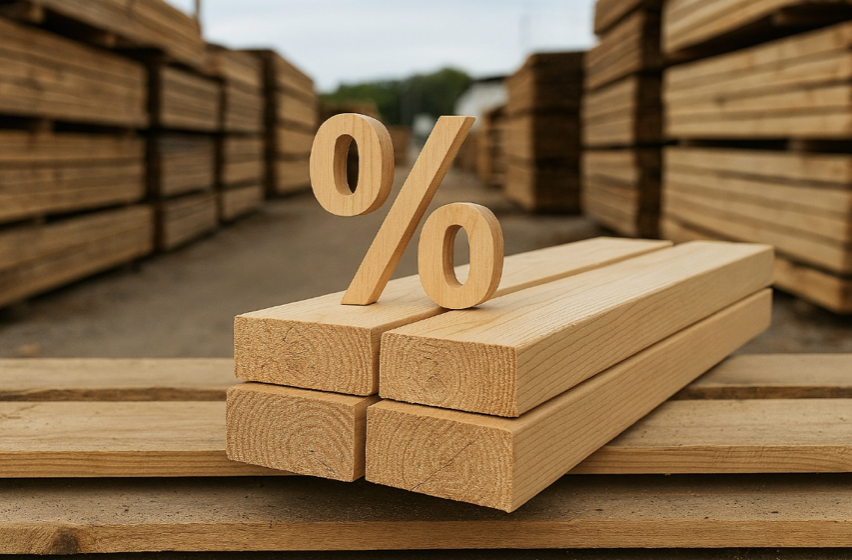
Interest Rates: From Headwind to Market Stabilizer
According to Deloitte’s 2026 Engineering & Construction Industry Outlook, the construction sector continues to operate under higher-than-normal interest rates, but with growing signs of stabilization and future easing. While elevated rates may delay some projects, they also bring greater pricing discipline, improved planning horizons, and more predictable demand cycles.
In the lumber industry, this often results in a delayed rebound effect: builders pause, reassess, then re-enter the market with greater clarity once financing conditions stabilize. This creates windows of opportunity for lumber buyers to secure supply at normalized pricing before demand accelerates.
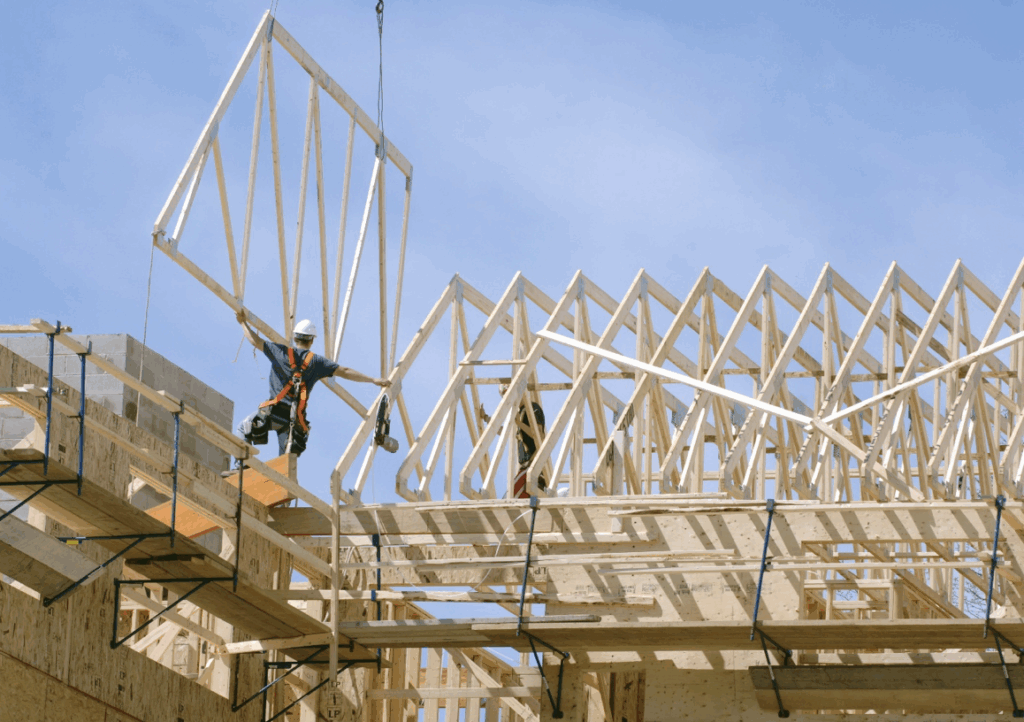
Positive Lumber Market Trends Taking Shape
1. Resilient Housing & Demographic Demand
Millennials and Gen Z continue moving into prime home-buying and remodeling years. Even with higher borrowing costs, long-term housing demand remains intact — especially for entry-level, multi-family, and regional housing projects.2. Strong Repair & Remodeling Activity
Higher interest rates are encouraging homeowners to renovate instead of relocating, fueling steady demand for framing lumber, panels, and specialty wood products. This segment is less sensitive to rate fluctuations than new construction.
3. Price Normalization = Strategic Buying Windows
After extreme volatility in recent years, lumber prices have largely normalized. This environment rewards buyers who can act quickly, compare suppliers, and secure favorable terms — exactly where a digital sales platform, like TimberBase, excels.
Compare real-time quotes in one place — register free here
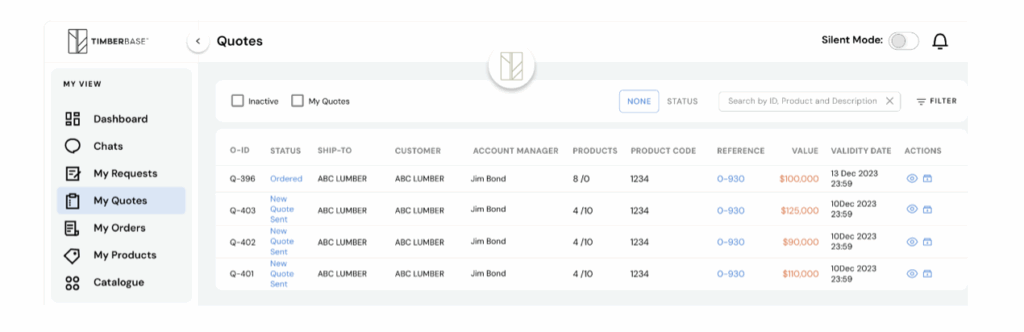
Why This Environment Benefits TimberBase Users
- Advance RFQs
- Strategic volume buys
- Better alignment between project timelines and material delivery
Turning Interest Rate Shifts into Opportunity
Interest rates will always influence construction activity — but they don’t have to dictate outcomes. Companies that combine market awareness with digital sourcing tools are better positioned to respond, adapt, and grow.
Whether you’re sourcing lumber on a global basis, selling inventory, or planning for 2026 demand, get in touch with us and see how an advanced digital sales platform helps you stay ahead of the market.